

What is Cognee?
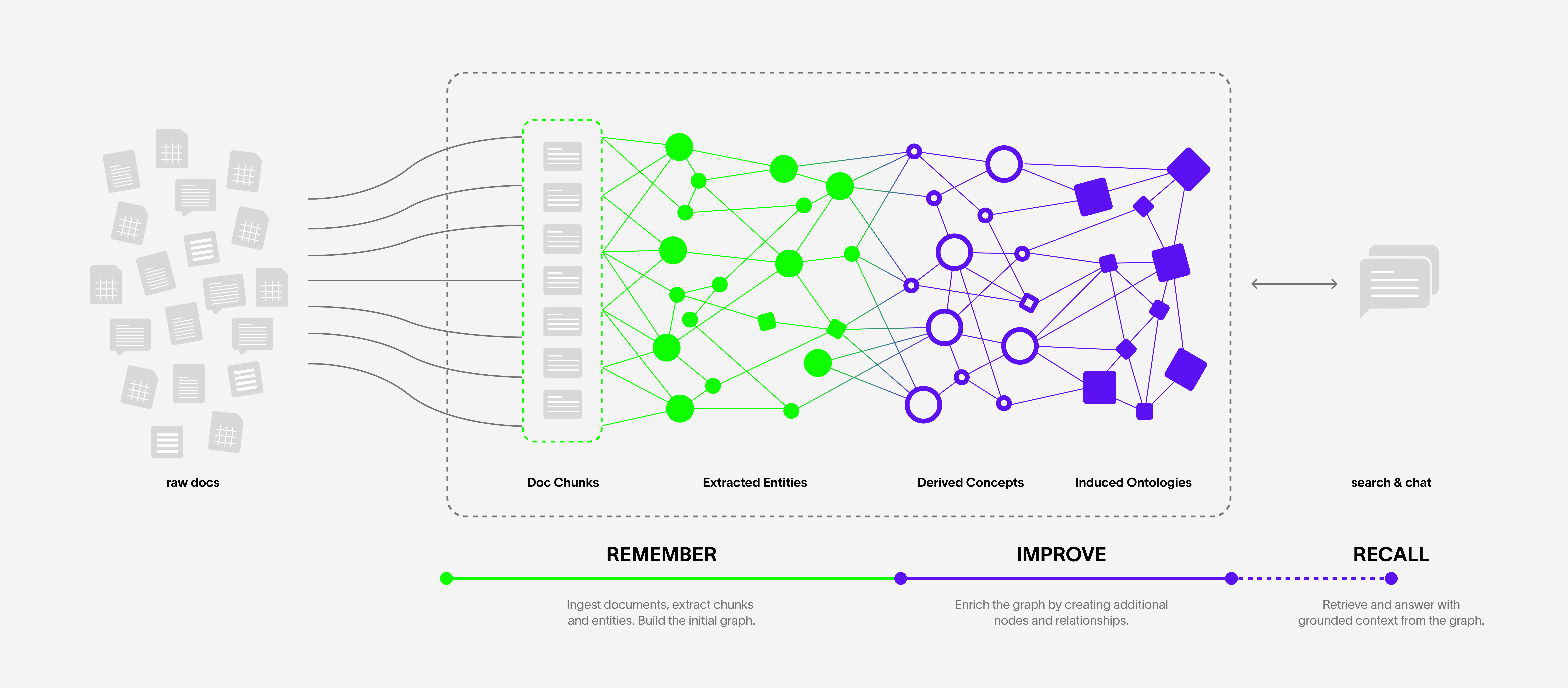
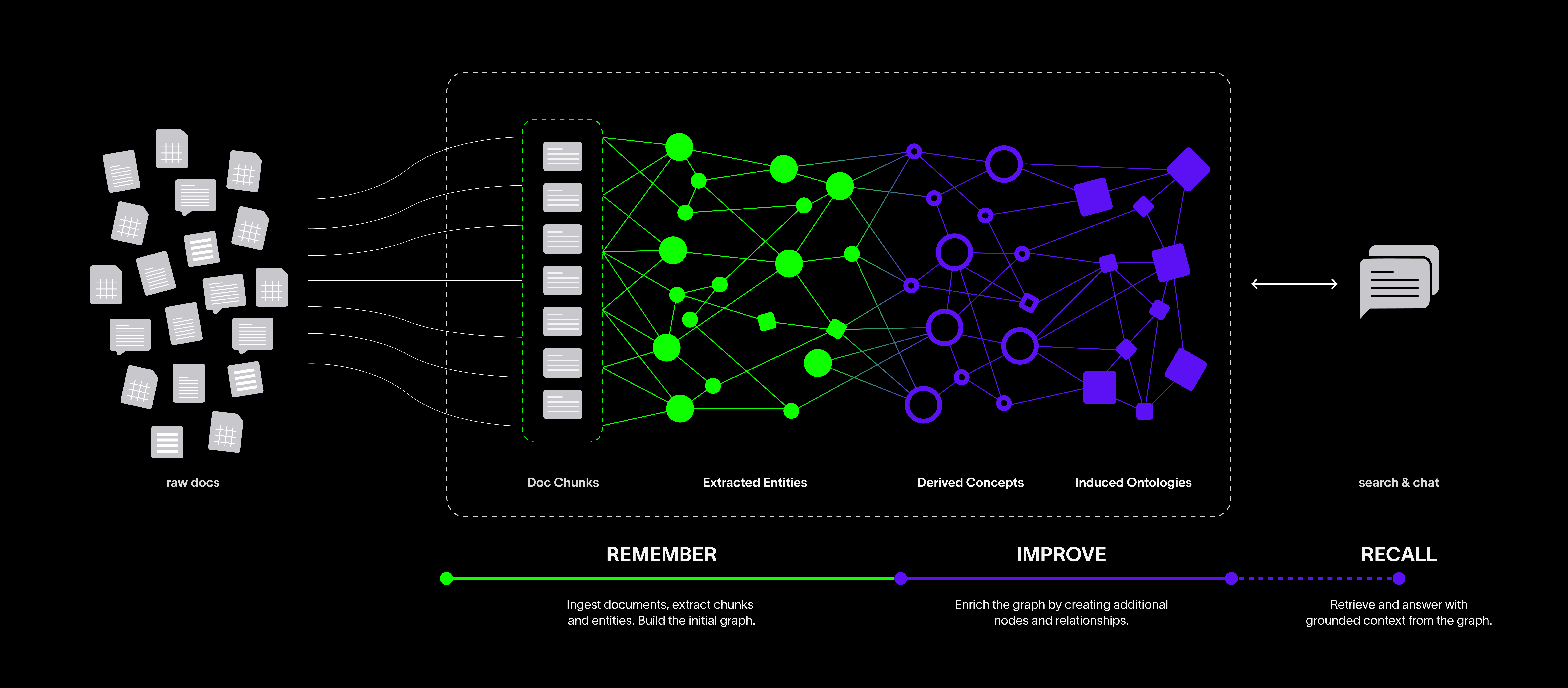
Cognee is a memory layer for AI agents and tools. It is not an LLM, and it is more than plain RAG. You keep using whatever model you already have (Claude, GPT, a local model); Cognee sits between your data and that model and gives it long-term, connected memory.- Not a model. Cognee calls an LLM to build and query memory, but it does not replace your model. It prepares the right context for each call your agent makes.
- More than RAG. Classic RAG embeds text chunks and retrieves by similarity. Cognee adds a knowledge graph — a “brain” of entities and the relationships between them — on top, so recall can follow connections, not just match text.
- A layer you plug in. Use it from Python, the CLI, a REST API, direct integrations like Claude Code, or MCP-compatible clients like Cursor and Cline through the Cognee MCP server.
.improve.
Why AI memory matters
When you call an LLM, each request is stateless: it doesn’t remember what happened in the last call, and it doesn’t know about the rest of your documents. That makes it hard to build applications that actually use your documents and carry context forward. You need a memory layer that can link your documents together and create the right context for every LLM call.How Cognee works
Cognee v1.0 exposes four operations that cover the full memory lifecycle:-
.remember— Store data in memory: Give Cognee text, files, or URLs. It ingests, chunks, extracts entities, and builds the knowledge graph for you in one call. Supports permanent graph memory or fast session memory. -
.recall— Query memory: Ask a question in natural language. Cognee picks the best retrieval strategy automatically, or you can specify one. Works across the permanent graph and session cache. -
.improve— Enrich existing memory: Runs enrichment passes on an already-built graph. With session IDs, it bridges short-term session memory into the permanent graph and applies feedback-based weighting. -
.forget— Remove memory: Delete a specific data item, an entire dataset, or everything owned by the current user.
License
Cognee is open source and released under the Apache License 2.0. You are free to use, modify, and distribute it in both personal and commercial projects, subject to the terms of the license.Ready to get started?
Set up your environment
Installation GuideSet up your environment and install Cognee to start building AI memory.
Run your first example
Quickstart TutorialGet started with Cognee by running your first knowledge graph example.
Explore the docs
Core Concepts: Understanding Cognee
Learn about Cognee’s architecture, building blocks, and main operations that power the system.
Setup Configuration
Set up LLM providers, embedding engines, vector stores, and graph databases to customize Cognee for your needs.
Essential Guides and Customizing Cognee
Step-by-step guides for customizing Cognee, including custom tasks, pipelines, and advanced configuration.
Examples and Use Cases
Explore real-world examples and use cases for building AI memory applications with Cognee.